Uncover the Secrets & Splendor of Vatican Gold: Art, History & Treasures
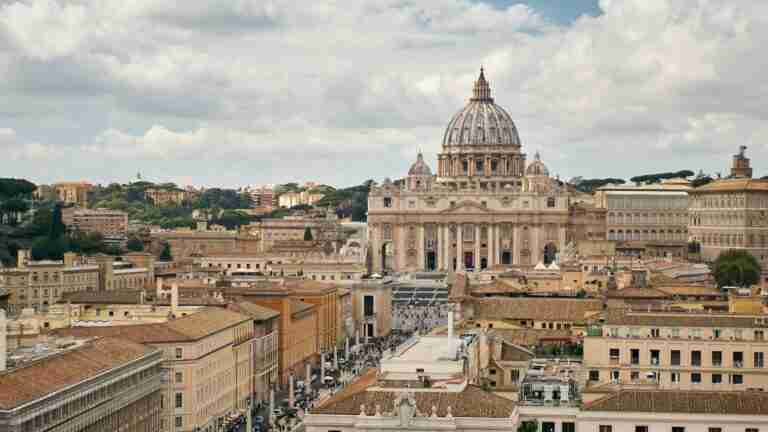
I’ll never forget the first time I saw it. I was leading a small group through the vast expanse of St. Peter’s Basilica, and as the morning sun streamed through the high windows, it happened. The light caught the edge of a massive, twisting column, and suddenly, the entire structure seemed to ignite. It wasn’t just brown metal; it was a blaze of warm, radiant gold. A collective gasp went through our group. That was their first encounter with what many come to Rome seeking: the legendary Vatican gold.
But here’s the truth that every seasoned guide knows: “Vatican gold” isn’t a single treasure chest hidden in a dungeon. It’s a story. It’s the narrative of faith, power, art, and devotion, written not in ink, but in gilded light. It’s in the shimmer of a million mosaic tiles, the glow of a master’s brushstroke, and the sacred objects used in worship for centuries.
If you’ve ever wondered about the reality behind the rumors, or you’re planning a trip and want to know where to look, you’ve come to the right place. Consider this your personal guide, from a longtime Vatican expert, to the true meaning of Vatican gold. We’ll explore its history, uncover its masterpieces, and separate the fascinating facts from the Hollywood fiction. Let’s begin.
More Than Bullion – What “Vatican Gold” Really Means
When you hear the term Vatican gold, it’s easy to picture Scrooge McDuck diving into a vault of gold coins. The reality is far more interesting and layered. In the context of the Holy See, “gold” is less about currency and more about purpose. Let’s break down what people are actually talking about.
First and foremost, we have the sacred art and artifacts. This is the Vatican gold you can see with your own eyes. Think of the stunning altarpieces, the delicate chalices used for Mass, and the intricate reliquaries designed to hold precious relics. For centuries, artists used real gold leaf, pounded incredibly thin, to adorn these objects. Why? Because gold doesn’t tarnish or corrode. It symbolized the eternal, unchanging light of heaven. This wasn’t about flaunting wealth; it was a theological statement in material form.
Then there’s the architectural gold. Look up at the ceiling of the Sistine Chapel or the domes of the basilica. That shimmering background behind the figures isn’t just yellow paint; it’s often genuine gold leaf. This technique, used extensively in Byzantine and Renaissance art, makes the entire space feel lifted from earth and transported to a divine realm. The light in these spaces literally moves and changes with the sun, making the art feel alive. This is one of the most breathtaking ways to experience the Vatican treasures.
Now, we can’t ignore the Papal Treasury. This is where history and finance meet. The Vatican, as a sovereign state, has historically held and managed assets. The most famous, and often misunderstood, entity is the Institute for the Works of Religion, sometimes called the Vatican Bank. It’s crucial to understand that this modern financial institution is separate from the artistic and historic Vatican gold you come to see. Its purpose is to manage assets for religious orders, clergy, and Catholic institutions around the world, not to guard piles of bullion.
Finally, for the history buffs, there’s a fascinating document known as the Golden Bull of 1478. A “bull” is a formal papal decree, and this one, issued by Pope Sixtus IV, had a seal made of gold, hence the name. It dealt with the regulation of the Vatican’s choir, the Cappella Giulia. It’s a perfect example of how the term “gold” extends even into the world of historic documents and decrees, shaping the history of the Vatican itself.
So, when we talk about Vatican gold, we’re really exploring a spectrum that runs from spiritual symbolism to historical administration. But to truly get it, we need to step back in time.
A Gilded History – Why the Popes Embraced Gold

To understand the Vatican’s relationship with gold, you have to see it through the eyes of the Renaissance popes. This wasn’t about greed; it was a divine mission expressed through patronage. In the 15th and 16th centuries, the Church was the greatest patron of the arts in the world.
Popes like Julius II (the man who commissioned the Sistine Chapel ceiling) and Sixtus IV were, in a way, spiritual CEOs of a massive project: rebuilding and glorifying Christendom. They believed that the house of God on Earth should reflect the majesty of Heaven. What better material to represent the light of God than gold? Its incorruptible, radiant nature made it the perfect metaphor for the divine. This symbolism of gold is the key to understanding everything you see.
This led to an incredible era of artistic patronage. Imagine Pope Julius II summoning a reluctant Michelangelo to paint the Sistine Chapel ceiling, or Pope Leo X commissioning Raphael to fresco his private rooms. These projects consumed vast resources, including immense quantities of the costly ultramarine blue for the Virgin Mary’s robes and, of course, gold leaf. This investment wasn’t for personal glory; it was a public declaration of faith and a way to inspire awe and devotion in the thousands of pilgrims who would visit.
We also have to touch on a famous historical forgery that shaped this mindset for centuries: the Donation of Constantine. This document, later proven to be fake, claimed that Emperor Constantine I transferred authority over Rome and the Western Roman Empire to the Pope. For hundreds of years, it was used to justify the Papacy’s temporal power and its accompanying wealth. While the document itself was a myth, the idea it promoted, that the Church should be a powerful, visible, and glorious institution on Earth, was very real. It set the stage for the kind of artistic splendor we associate with the Vatican City today.
This historical context transforms your visit. You’re not just looking at pretty, shiny things. You are witnessing the end result of a deep seated belief that beauty could be a pathway to the divine, and that gold, in all its forms, was the ultimate medium for that spiritual journey.
A Virtual Tour of Vatican Gold – Where to Find the Masterpieces
Alright, now for the part you’ve been waiting for, the practical guide. Where do you actually see this famous Vatican gold? Let me be your virtual tour guide as we walk through the hallowed halls of the world’s smallest state. I’ll point out the can’t-miss spots and tell you exactly what to look for.
St. Peter’s Basilica: The Heart of Gilded Splendor
The moment you step inside St. Peter’s, your eyes are drawn upward. The scale is overwhelming, but focus on the center of the church, directly under the magnificent dome.
- Bernini’s Baldacchino: This is the colossal, 95-foot-tall bronze canopy that stands over the main altar, which itself sits directly over the tomb of St. Peter. It’s the centerpiece of the basilica and a masterclass in dramatic use of materials. Here’s a fun fact I love to share with my groups: the bronze for this structure was famously stripped from the portico of the ancient Roman Pantheon by order of Pope Urban VIII. But the key thing to note is its color. It’s not dull bronze; it has a distinct golden glow. That’s because it’s heavily gilded. As the sun moves, different parts of this monumental structure catch the light, making it seem alive and dynamic. It is the single greatest example of Baroque art in the world and the undisputed king of Vatican gold artifacts.
- The Cathedra Petri (Throne of St. Peter): Keep looking. In the apse, behind the Baldacchino, you’ll find another of Bernini’s triumphs. The Cathedra Petri is a glorious, golden enclosure that holds an ancient wooden chair traditionally believed to have been used by St. Peter. Bernini didn’t just build a case; he created a theatrical spectacle. The chair is surrounded by brilliant gilded bronze, golden stucco clouds, and a glowing alabaster window depicting the Holy Spirit. The entire piece is designed to look like the throne is being lifted to heaven on a cloud of divine light. It’s breathtaking.
The Vatican Museums: A Treasure House of Gold
Once you tear yourself away from the basilica, the Vatican Museums offer an endless feast of gilded wonders.
- The Sistine Chapel: Everyone cranes their neck to see Michelangelo’s ceiling and Last Judgment, and for good reason. But before you look up, look at the walls. The brilliant frescoes by Botticelli, Perugino, and others that line the chapel are framed with lavish gilding. The figures themselves are often set against backgrounds of gold leaf. And on the ceiling itself, don’t miss the magnificent ignudi, the athletic, nude male figures surrounding the main scenes. They are depicted holding ribbons of gold and medallions painted to look like solid, polished gold. This gilding makes the entire ceiling shimmer.
- The Raphael Rooms: As you walk through these rooms, pay attention to the details. In his famous School of Athens, look at the architectural elements in the painting. The vaults and details are picked out in gold. This wasn’t just decorative; it was a way for Raphael to blend the classical world with a sense of divine order and brilliance.
- The Gallery of Maps and Pio Clementino Museum: Almost every ceiling in the Vatican Museums is a work of art in itself. The Gallery of Maps features stunning gilded stucco work overhead. In the Pio Clementino Museum, home to classical statues, you’ll find ancient Greek and Roman sculptures that were once brightly painted and gilded, giving you a small glimpse of their original, dazzling appearance.
This virtual tour just scratches the surface, but it gives you a roadmap. When you visit, you’ll no longer see just a museum; you’ll see a story told in light, faith, and the enduring power of gold.
Myths vs. Reality – The Truth About Secret Vaults and Swiss Guards
Over years of guiding, I’ve heard every question and theory about the Vatican’s wealth. It’s time to gently clear the air on a few things. The world of the Holy See is shrouded in mystery for many, and that mystery often leads to some tall tales.
Let’s start with the big one: the idea of “secret vaults” overflowing with gold bars and lost treasures like something from a Dan Brown novel. The truth is, the closest thing to this is the Vatican Secret Archives. But “secret” is a bit of a mistranslation; a better word would be “private.” It’s the Pope’s personal library, housing an unimaginable wealth of historical documents, like letters from Michelangelo asking for his paycheck, not a cavern of gold coins. The real Vatican treasures are the ones we’ve been discussing: the art, the architecture, the history. They’re not hidden; they’re displayed in plain sight, waiting for you to appreciate them. The value is in their cultural and spiritual significance, not their melt-down value.
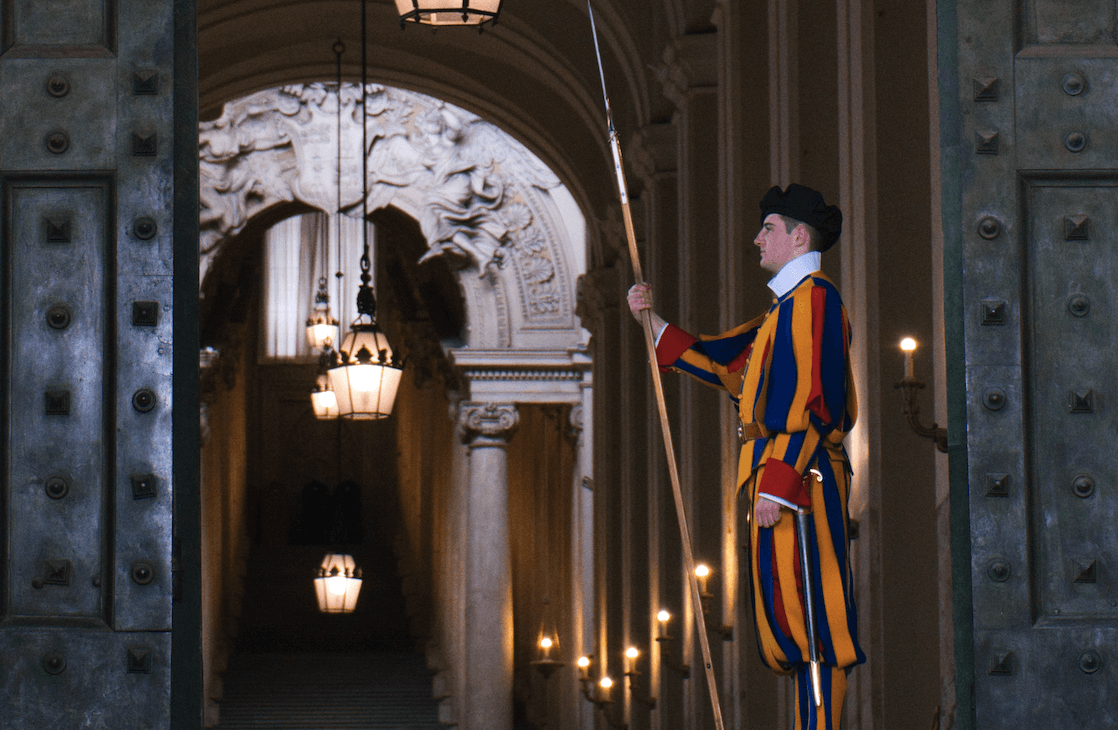
Next, let’s talk about the Swiss Guard. Those striking blue, red, and yellow uniforms are iconic. A persistent myth claims Michelangelo designed them. It’s a fun story, but the records show the uniforms were introduced around 1914, long after his time. And no, the yellow stripes aren’t made with real gold thread. Can you imagine the maintenance? They are made of simple, durable fabric. The true “gold” of the Swiss Guard isn’t in their clothes; it’s in their five-century-old tradition of loyalty and service to the Pope.
Finally, there’s the Institute for the Works of Religion (IOR), often called the Vatican Bank. This is perhaps the most misunderstood aspect of Vatican finance. It’s essential to separate this modern financial entity, which manages accounts for thousands of Catholic institutions, from the historic concept of Vatican gold. They are not the same thing. The IOR doesn’t hold the golden chalices or Bernini’s altarpieces. Its role is administrative. Thinking of the IOR as a treasure vault is like thinking of your local bank branch as a giant pile of the cash it manages, it’s a fundamental misunderstanding of its function.
By setting these myths aside, we can better appreciate the true marvels that are actually there. And now, with a clearer picture, let’s get you ready to see them for yourself.
Planning Your Pilgrimage – How to See the Vatican’s Golden Treasures
So, you’re inspired to witness this gilded splendor in person? Wonderful. As your personal Vatican advisor, I’m going to give you the insider tips that will transform a hectic visit into a profound experience. The key is planning, not just showing up.
First, let’s talk about your must see itinerary. If you only have one day, here’s your golden route:
- St. Peter’s Basilica: Go straight to Bernini’s Baldacchino and let yourself be amazed by its scale. Then, walk to the apse to see the Cathedra Petri. Take a moment to just sit in a pew and watch the light change around them.
- The Vatican Museums: Don’t try to see everything. Make a beeline for the Raphael Rooms and then the Sistine Chapel. Remember to look at the walls and the gilded details before you get neck strain from staring at the ceiling!
- A Hidden Gem: If you have time, the Vatican Necropolis (the Scavi tour) beneath the basilica is incredible, but it requires booking far in advance. It shows a humbler, ancient side of Vatican history, a stark contrast to the glory above.
Now, for my pro tour guide tips to make your visit seamless:
- Timing is Everything: The best light for seeing the gold leaf in St. Peter’s is often in the morning, when the sun hits the Baldacchino. For the Museums, the last two hours before closing can be slightly less crowded. But honestly, the single best investment you can make is in an early access tour. Yes, it costs more. But standing in the Sistine Chapel with only 20 other people, instead of 2,000, is a spiritual and artistic experience you will never forget. The silence and the space to actually see the art is worth every penny.
- Tickets, Tickets, Tickets: I cannot stress this enough. Book your tickets online, in advance, from the official Vatican website. The “skip the line” ticket is not a luxury; it is a necessity. It can save you hours, sometimes entire afternoons, of standing in the hot Roman sun. Your future self will thank you.
- Dress for Respect: Remember, you are entering active places of worship. This means covering your shoulders and knees. It’s a sign of respect for the sacred space and the faith it represents. A light scarf or a pair of long pants in the summer can save you from being turned away at the door.
Finally, the most important tip I can give you: Slow down. The sheer volume of art can be overwhelming. Don’t try to tick every box. Find one or two pieces that speak to you, maybe the glow of a mosaic, or the twist of a golden column, and just spend a few minutes with them. That’s where the real magic of Vatican gold reveals itself. It’s not in the rush, but in the quiet moments of awe.
Final Thought: The True Value of Vatican Gold
I’ll leave you with a final thought, one I often share with my groups as we exit the basilica into St. Peter’s Square.
The true value of Vatican gold can never be measured on a stock exchange or weighed on a scale. Its worth is found in its enduring power to connect us to something greater. It is the frozen light of a thousand artists’ prayers, the tangible expression of a faith that sought to build heaven on earth.
That gasp I heard from my group on that first morning? That’s the real treasure. It’s the human response to breathtaking beauty, a moment of wonder that has been happening for centuries. The Vatican City stands as a guardian of this immense cultural and spiritual heritage, preserved not for a privileged few, but for all of humanity.
So, when you visit, look beyond the shine. See the devotion, the history, and the sheer human genius that turned simple metal into a language of the divine. That is the legacy of Vatican gold, a legacy that is waiting, quite literally, to illuminate your journey.
Ready to witness the glow of centuries for yourself? Start planning your visit to the world’s smallest state and its most magnificent treasures today.